How an engagement runs: the first 90 days and every month after
Meta ads reward patience in the first weeks and discipline afterward. This is the sequence we follow with every client, whether you arrive with nothing or with an account that already spends. The dates shift a little depending on how much needs to be built; the order does not.
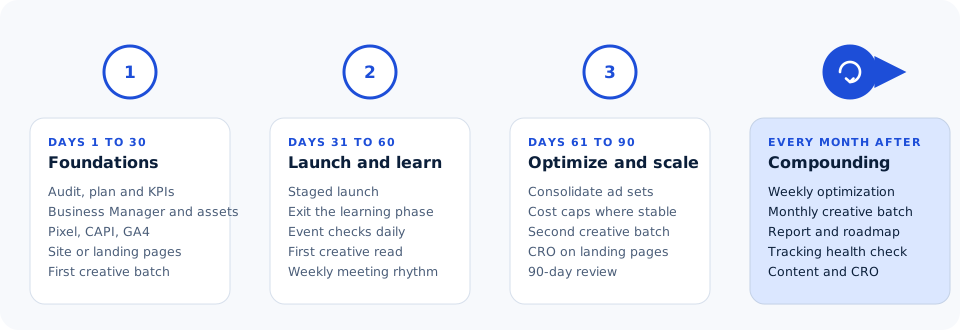
Build everything the campaigns will depend on
The first month is mostly construction, and we are open about that from the proposal onward. We begin with a kickoff meeting to confirm goals, margins, average order or lead value, seasonality and the people involved on your side. Within the first week you receive a written plan: objectives, campaign structure, budget by stage, the conversion events we will optimize for, and the launch calendar.
In parallel we build or repair the foundation. Business Manager is created or restructured in your company's name, the ad account and payment method are added, the Facebook Page and Instagram professional account are linked, the domain is verified and a single dataset is created for the pixel and the Conversions API. If you need a website or landing pages, design and copy start in week one and the build is complete by the end of week three. Tracking is installed through Google Tag Manager, the Conversions API is connected server-side, and every event is tested in Events Manager until it fires once and matches well.
Creative production starts as soon as we have your footage, products or a recording session scheduled. By the end of the month you have approved the first batch: several distinct concepts, each with multiple hooks, cut for Reels, Feed and Stories.
- Kickoff, written plan and launch calendar
- Business Manager, ad account, Page, Instagram, dataset, domain verification, business verification started
- Website or landing pages built and tested on mobile
- Pixel, Conversions API, GA4 and event deduplication confirmed in Events Manager
- First creative batch approved in the weekly meeting
Go live in stages and let the system learn
Launch is staged. One campaign goes live first with enough budget for its ad sets to exit the learning phase within a reasonable window, and we check events, delivery and landing page behavior daily for the first week. Once the data looks clean, the remaining campaigns follow. For e-commerce this usually means an Advantage+ shopping campaign first; for service businesses it is often lead ads with instant forms side by side with a website conversion campaign.
During this month we deliberately resist the urge to edit. Changing budgets, audiences or creative every day resets learning and makes the numbers unreadable. Instead, we review once a week, retire anything that is clearly failing, and leave the rest alone long enough to produce a real signal. The first creative read usually comes at the end of this month: which concepts earn attention, which hooks hold it, and which lead to actions on the page.
The weekly meeting becomes the heartbeat of the engagement from here on. You see the dashboard, we explain what the early data does and does not tell us yet, and we agree on the next week's actions.
- Staged launch with daily checks in week one
- Learning phase exited on the main ad sets
- Events Manager, GA4 and CRM or orders reconciled for the first time
- First creative read by concept, hook and format
- Weekly meeting rhythm established with notes and owners
Consolidate what works and start compounding
By the third month there is enough data to make structural decisions. We consolidate spend into fewer, larger ad sets so each one has the volume to stay stable. Where results are predictable we introduce cost caps to protect efficiency as budgets grow. Audiences are cleaned up: overlap removed, existing customers excluded from prospecting where that makes sense, and lookalikes tested against broad targeting rather than assumed to be better.
The second creative batch ships, built on what the first one taught us. Winning concepts get new hooks and formats; weak concepts are replaced with new angles. Our conversion rate optimization work begins in earnest on the landing pages, using Meta's post-click data and GA4 to pick the first tests.
The month ends with a 90-day review: what we built, what we learned, where the account stands against the plan, and the roadmap for the next quarter. This is also where we recommend the right engagement model going forward if the one you started with no longer fits.
- Ad sets consolidated; cost caps or bid caps introduced where results are stable
- Second creative batch live, informed by the first read
- First CRO tests running on landing pages or checkout
- Audience hygiene: exclusions, overlap, suppression
- 90-day review and next-quarter roadmap
A predictable month, repeated
After the first quarter the engagement settles into a rhythm you can plan around. Every business day we check delivery, spend pacing, tracking health and account quality. Every week we meet, review the dashboard, make the scheduled optimizations and send notes. Every month a new creative batch enters testing, a written report explains the month, a tracking health check confirms that the pixel, the Conversions API and GA4 still agree, and the roadmap for the next thirty days is updated.
Content and CRO run on the same monthly cycle: articles and page copy for your site, and one or two structured tests on the pages your campaigns send people to. Once a quarter we hold a longer planning session to revisit goals, seasonality and budget.
| Rhythm | What happens |
|---|---|
| Daily | Delivery, pacing, tracking and account quality checks; urgent fixes |
| Weekly | Client meeting, scheduled optimizations, creative rotation, notes with owners |
| Monthly | Creative batch, written report, tracking health check, CRO results, content, roadmap |
| Quarterly | Planning session: goals, seasonality, budget, engagement model |
What we need from you
Access to or ownership details for any existing accounts, your domain registrar and hosting, your product or service information, pricing and margins, raw footage or a few hours for a recording session, and one decision maker who attends the weekly meeting. Approvals typically happen in the meeting itself, so the engagement rarely waits on email threads.
How we make decisions
We decide on evidence, at a cadence that respects how Meta's delivery system learns. Budget moves, bidding changes and creative retirement follow written rules we share with you: minimum spend and conversion volume before judging an ad set, what counts as fatigue, when a cost cap is appropriate. If the data is not there yet, we say so and wait, instead of inventing a story.
Want to see this applied to your business?
Tell us where you are today and we will outline your specific first 90 days in the proposal, including what we would build first.